

Inspire the light of the future era and use technology to empower thousands of industries!
Mobile:18018730915
Email:yuchun.cao@foxmail.com
Add:3F, No. 34, District 5, Shilong Community, Shiyan Street, Baoan District, Shenzhen, Guangdong
A stepper motor is a special type of motor that has several advantages:
1. High precision: The stepper motor realizes rotation by controlling the pulse signal of each step. It has high-precision position control capability and can locate and control the rotation angle.
2. No feedback system required: The stepper motor can control the position according to the input pulse signal, without the need for an additional position feedback system, which simplifies the control system structure and reduces costs.
3. High reliability: The stepper motor has a simple structure, stable operation, no inductive devices, long life, low failure rate, and is easy to maintain and repair.
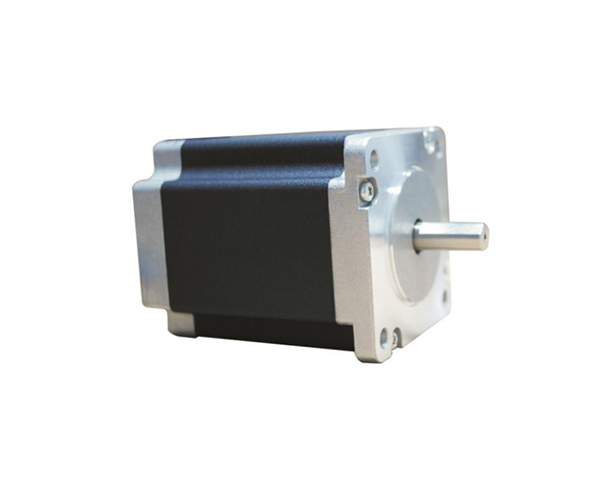
4. High torque at low speed: Stepper motors have the characteristics of high torque at low speed, which is suitable for low-speed operation and application scenarios requiring high torque.
5. Simple control: The stepper motor has a simple control method. It only needs to provide a pulse signal to achieve motion control. It is easier to control than other types of motors.
6. No encoder required: Compared to motors such as servo motors that require additional encoder feedback, stepper motors can achieve precise position control without encoders, saving costs and speeding up system design.
7. High efficiency: Stepper motors do not require additional power consumption when stationary and only consume energy when they need to rotate, which is relatively efficient.
In general, stepper motors have the advantages of high precision, no need for feedback, high reliability, high torque at low speed, and simple control. They are suitable for application scenarios that require position and angle control, such as printers, CNC machine tools, textile machinery, medical equipment, robots, and other fields.

Contact number:
18018730915Customer service:13414495621(Ms. Li)
Add:3F, No. 34, District 5, Shilong Community, Shiyan Street, Baoan District, Shenzhen, Guangdong
Email:yuchun.cao@foxmail.com

Official account

Consult us